
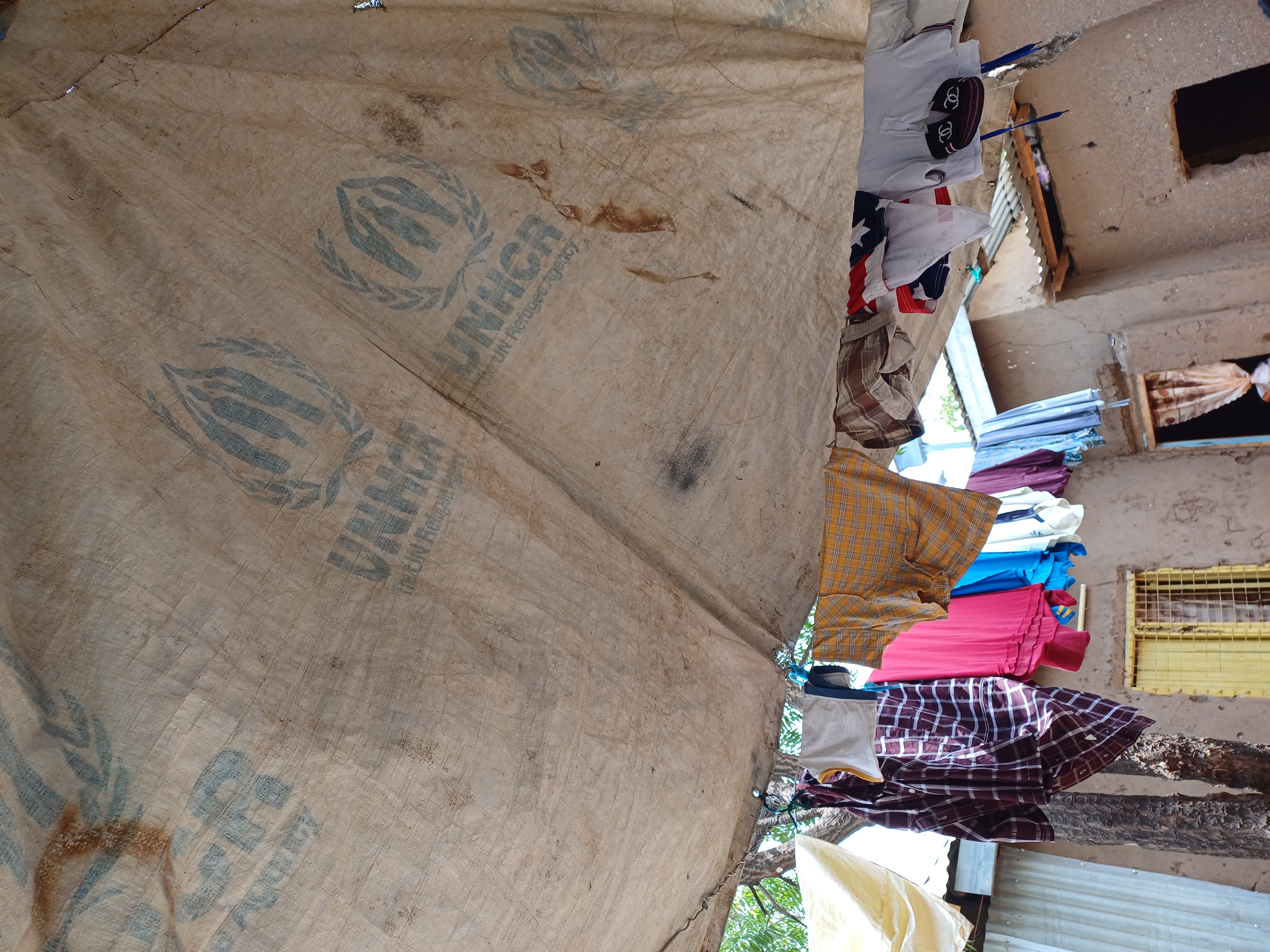
Kakuma isn’t just the name of one of our projects. It’s a real refugee camp in northern Kenya, in Turkana County. To understand why we support the bridge to Irene School in Maralal, you first need to understand what Kakuma is.
The camp was established in 1992 to take in thousands of unaccompanied South Sudanese minors fleeing the second Sudanese civil war: the so-called “Lost Boys of Sudan.” It has never stopped growing since. Over time, the Sudanese wave was joined by people fleeing Somalia, the Democratic Republic of Congo, Ethiopia, Burundi and, more recently, an independent South Sudan.
Today, according to UNHCR data from April 2026, the camp of Kakuma, the Kalobeyei settlement and Eldoret together host 314,888 registered people. 61% are 18 or younger: the overwhelming majority of people living in Kakuma are, literally, of school age. Around a hundred schools (pre-primary, primary and secondary) serve the area between Kakuma and Kalobeyei, but by the same sources roughly half of school-age children still remain out of any education path, and classes average more than 100 students. Our own figure, only 6% of eligible students reach secondary school, is about this second, narrower step: not enrollment itself, but the leap to secondary education.
Getting past these numbers means more than finding a place in school. Kenya has enforced a strict “encampment” policy for decades: people with refugee status cannot move freely outside the camp without specific permits, and even where the law promises paths to integration, as the 2021 reform does, access to documents, work permits and the formal job market remains slow, complicated, and often stuck in bureaucracy. For a student from Kakuma, finishing secondary school isn’t enough: someone needs to be willing to concretely support the next step, outside the camp.
That’s where our work comes in: sponsoring the transfer of students from Kakuma to Irene School in Maralal, and staying with them well past graduation. And that’s why we like to tell you how it turns out, when it goes well. Some of the students we’ve supported are about to finish university. One of them just completed an internship at the Embassy of South Sudan, the same country she had, years earlier, been forced to flee. A real full-circle moment: from a refugee camp to representing her own country in the world, even if just for an internship.
Sources: UNHCR Operational Data Portal, Kenya (April 2026); Lutheran World Federation, Kakuma education programme.