
I recently visited Rwanda, and I came back deeply affected by the stories of the 1994 genocide. What struck me most, though, wasn’t only the violence itself, but discovering how artificial the division behind it really was: the distinction between Hutu and Tutsi, now widely perceived as a historical fact, was never an ethnic division in the sense we usually mean. It was, in large part, a colonial administrative construction.
A social distinction, not an ethnic one
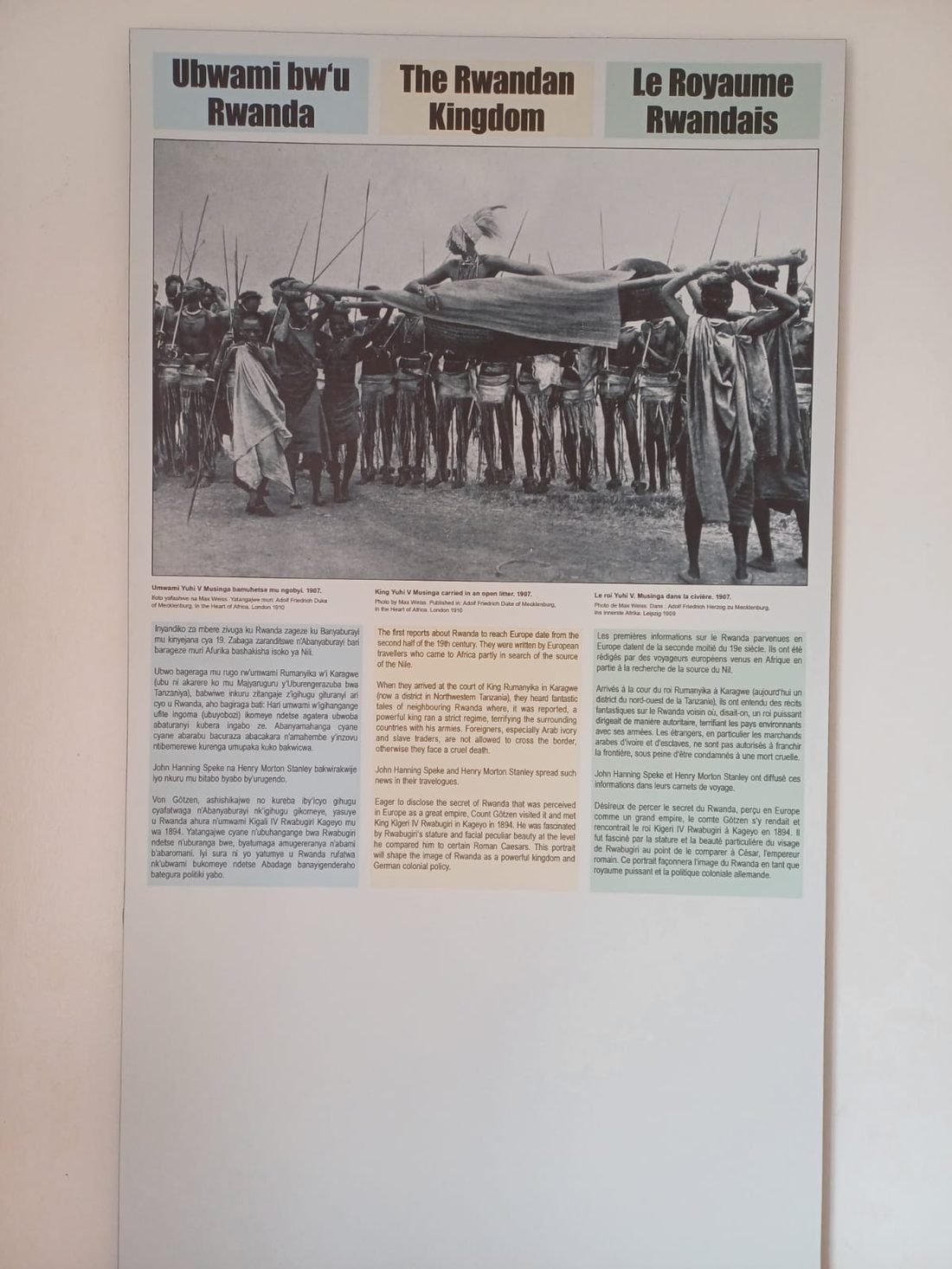
Before colonisation, “Hutu” and “Tutsi” mainly described social and economic categories, not distinct ethnic groups: people spoke the same language, shared the same territory and the same religious beliefs, often even the same family. A “Tutsi” was typically a cattle herder, a “Hutu” more closely tied to farming, but these categories were fluid: a farmer who accumulated enough cattle could, over a lifetime or a generation, become “Tutsi”.
Rwanda was first a German colony and, after the First World War, came under Belgian mandate. It was under Belgian administration, between the early 1930s and 1935, that this fluid distinction was turned into something rigid and permanent. The colonial authorities carried out a population census and introduced identity cards recording each person’s ethnicity. The exact criteria used to classify people remain, in their details, a matter of historical debate, but the most widespread and most often cited account is that anyone owning ten or more head of cattle was registered as Tutsi, and anyone owning fewer as Hutu. This was compounded by pseudoscientific measurements of physical traits, in line with the racial theories of the time, which attributed to Tutsis a supposedly “Hamitic” origin, closer to Europeans and therefore better suited to govern.
Once fixed on the identity card, ethnicity became hereditary, passed from father to child, regardless of how a family’s actual economic circumstances had changed. A fluid social category had become a fixed bureaucratic identity, and for decades the Belgians ruled by favouring the Tutsi minority as intermediaries of colonial power.
From the 1959 revolution to the 1994 genocide
In the years leading up to independence, achieved in 1962, the political wind shifted: with Belgian backing, the Hutu majority rose up against a system that had until then favoured the Tutsi, triggering waves of violence that forced hundreds of thousands of Tutsi into exile in neighbouring countries. Those exiled communities, and their children, formed the Rwandan Patriotic Front (RPF) in the 1980s, which invaded Rwanda from Uganda in 1990, starting a civil war.
On 6 April 1994, the plane carrying Rwandan President Juvénal Habyarimana was shot down as it approached Kigali, killing him and Burundian President Cyprien Ntaryamira. Who ordered the attack has never been established with certainty, but within hours, already organised and armed Hutu extremist groups began a systematic massacre of the Tutsi population and moderate Hutus. Over the following hundred days, between April and July 1994, somewhere between 800,000 and close to a million people were killed: one of the fastest rates of violence in modern history.
Radio and newspapers played a decisive role. The station Radio Télévision Libre des Mille Collines (RTLM) and the newspaper Kangura spread propaganda for months that dehumanised Tutsis, calling them “cockroaches” (inyenzi), and during the genocide broadcast direct instructions on where people in hiding could be found. Many victims were killed by neighbours, colleagues, sometimes even relatives: the machinery of violence relied heavily on the mobilisation of ordinary people, not only organised militias like the Interahamwe.
A documented failure of international institutions
On 11 January 1994, nearly three months before the genocide began, Canadian General Roméo Dallaire, commander of the UN peacekeeping mission in Rwanda (UNAMIR), sent a cable to UN headquarters in New York, later known as the “genocide fax”, reporting information about plans to exterminate the Tutsi population and requesting authorisation to act against arms caches. Authorisation never came.
When the genocide began, ten Belgian peacekeepers were killed while protecting Prime Minister Agathe Uwilingiyimana, who was herself assassinated. Belgium withdrew its contingent, and the UN Security Council, rather than reinforcing the mission, drastically cut its size: from around 2,500 to just over 270 peacekeepers, in the very weeks when the killing was at its worst.
In December 1999, an independent inquiry commissioned by UN Secretary-General Kofi Annan concluded that the failure of the United Nations’ response to the Rwandan genocide was due to a lack of resources and, above all, a lack of political will, and recommended that the organisation offer a public apology to the Rwandan people. Annan himself, who at the time headed the UN’s peacekeeping department, expressed “deep remorse” for the organisation’s failure.
A reflection
What makes Rwanda’s history so necessary to tell isn’t only the violence of 1994, but its origin: a line drawn on paper, on arbitrary grounds, that within two generations became a deadly boundary. It shows how propaganda can take an administrative distinction, almost accidental in its origins, and turn it into hatred capable of setting neighbours against each other: first through decades of colonial racial theory, then through the broadcasts of Radio Télévision Libre des Mille Collines and the pages of Kangura. It’s a story that speaks directly to how we classify people, the institutions we choose to build, and the responsibility of those who, from positions of power or observation, choose to look away.
Sources: Lumen Learning, World History; National Security Archive, The Rwanda “Genocide Fax”; Global Centre for the Responsibility to Protect; summary of the independent UN inquiry report on Rwanda (December 1999, panel chaired by Ingvar Carlsson).